

A Kaizen event is a short-term, focused initiative where cross-functional teams work together to solve a specific problem or improve a process on the manufacturing shop floor. Based on the Japanese idea of continuous improvement, called kaizen, these events usually last three to five days. They aim to create quick results by empowering employees to identify inefficiencies and implement changes.
These rapid improvement workshops help teams reduce waste, improve quality control, and shorten lead times across critical business processes.
Kaizen itself is rooted in five foundational principles which also guide how Kaizen events are structured and executed.
What Is a Kaizen Event in Manufacturing?
In a lean manufacturing environment, Kaizen events are a powerful improvement tool to reduce waste, streamline workflows, and improve productivity. A kaizen event is different from daily incremental improvements. Kaizen events are more intensive, with dedicated time, people, and resources devoted to a targeted issue. It’s a cornerstone of lean kaizen methodology and a proven driver of shop floor problem solving.
Kaizen events are also known as “Kaizen blitzes” or “rapid improvement events.” In other words, these terms highlight their fast-paced and solution-driven nature. Kaizen events often use lean tools like value stream mapping, root cause analysis, spaghetti diagrams, and the PDCA cycle. These tools help identify and solve problems effectively.
When and Why to Run a Kaizen Event
A Kaizen event is most effective when there is a clearly defined problem or opportunity for improvement that can be addressed within a short time frame. This could involve improving quality control, reducing lead times, or removing inefficiencies in core manufacturing processes. Common triggers or scenarios for organizing a Kaizen event include:
- Recurrent quality control issues or production defects
- Bottlenecks slowing down throughput and increasing lead times
- Excessive material handling or waste (motion, inventory, overproduction)
- Safety concerns or ergonomic issues
- Layout inefficiencies or long setup/changeover times
Kaizen events align teams around shared goals and accelerate progress toward continuous improvement. For shop floor managers, they offer a structured way to tap into frontline expertise. For operational excellence leaders, Kaizen events are a repeatable method for embedding lean manufacturing principles in everyday work.
These events also act as effective training experiences. Participants build their problem-solving skills, learn to apply lean tools, and take ownership of the solutions they develop. Over time, Kaizen events can catalyze a lasting shift toward a culture of continuous improvement.
8 Steps to Run a Successful Kaizen Event
Running a successful Kaizen event requires planning, collaboration, and follow-through. Here are the key steps:
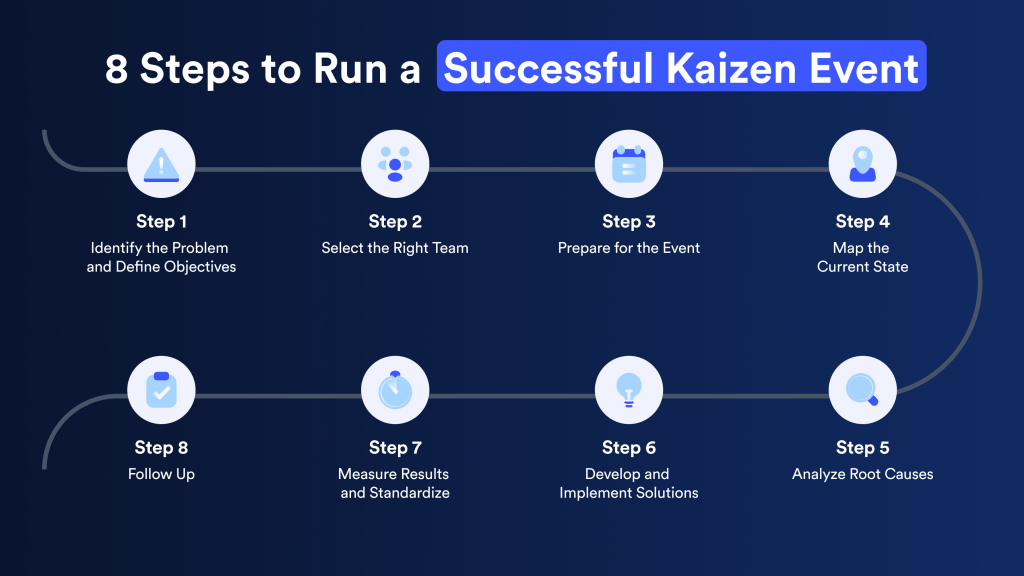
1. Identify the Problem and Define Objectives
First, start with a clear problem statement and measurable goals. What manufacturing process needs improvement? What outcomes do you want to achieve? Define the scope of the Kaizen event to ensure it remains manageable and focused.
2. Select the Right Team
Assemble a cross-functional team that includes shopfloor operators, supervisors, engineers, maintenance staff, and quality professionals. Involve people closest to the work to establish practical insights, encourage ownership and ensure buy-in.
3. Prepare for the Event
Before the event begins, gather relevant data such as KPIs, production logs, and defect rates. Share the event schedule and communicate expectations. Offer training in important lean tools like 5S, root cause analysis, and visual management.
4. Map the Current State
Use visual tools like value stream mapping or spaghetti diagrams to visualize and analyze the existing workflow. Look for signs of waste, variation, or inefficiency that could be contributing to the problem.
5. Analyze Root Causes
Facilitate brainstorming sessions to uncover the root causes of the identified problems. Use lean problem solving tools, for example the 5 Whys or fishbone diagrams, to go deeper and ensure the team addresses the right issues.
6. Develop and Implement Solutions
Work together to design new processes or improvements. The pilot changes quickly to test if things work. This includes rearranging workstations, updating standard operating procedures (SOPs), or adding new tools.
7. Measure Results and Standardize
Finally, at the end of the Kaizen event, compare outcomes to your original goals. Did you reduce defects and improve cycle time? Did you save floor space or improve quality? Document the new standards and ensure everyone is trained to maintain the improvements.
8. Follow Up
Lastly, assign owners for follow-up tasks and plan for periodic audits. Sustainable improvement comes from long-term commitment, not just the event itself. Regular audits and feedback loops help prevent backsliding.
Best Practices to Lead a Kaizen Event on the Shopfloor
Leading a Kaizen event requires both structure and flexibility. Here are best practices to maximize success:
Engage the shopfloor early. Operators and frontline workers are experts in the process. Involve them in defining problems and shaping solutions.
Keep the scope focused. Trying to fix everything at once leads to burnout and confusion. Choose a defined area or process.
Use visual tools. Visual management boards, floor tape, and digital dashboards make it easier to communicate goals, progress, and results.
Celebrate small wins. Recognize the team’s contributions and share results across the factory to build momentum.
Ensure management support. Leaders should remove roadblocks and champion the team’s efforts during and after the event.
Focus on sustaining. The hardest part of a Kaizen event isn’t the implementation, it’s keeping the changes in place. Use audits, standard work, and follow-ups to embed improvements.
How Digital Tools Enhance Kaizen Events
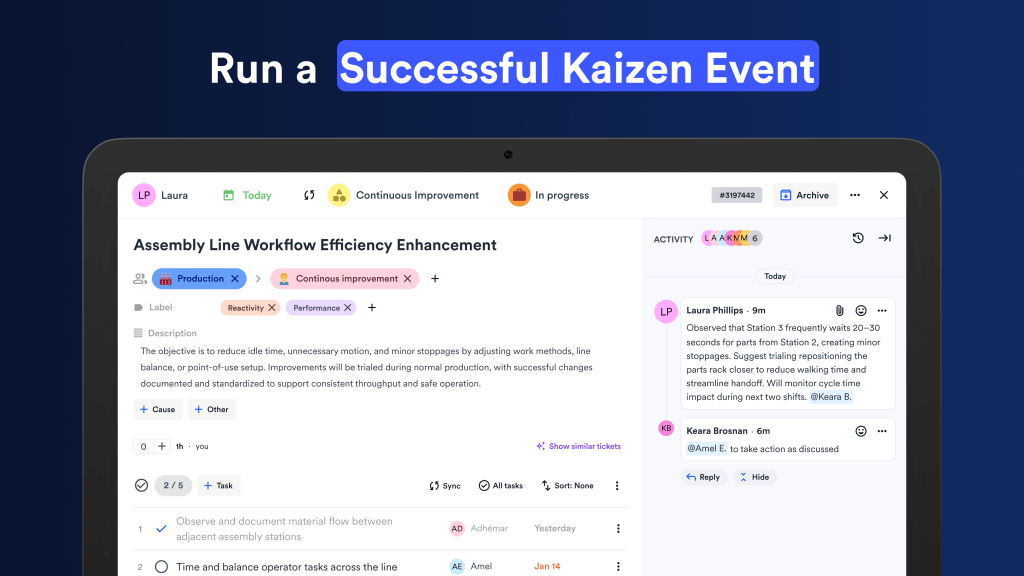
While Kaizen events have traditionally relied on paper-based tools, digital platforms are increasingly important. When teams use digital solutions, Kaizen events become more effective and sustainable. Teams can use digital tools to document actions, track performance, and collaborate in real time.
A digital Kaizen event management system can:
- Centralize data collection and visualization
- Provide real-time performance dashboards
- Facilitate cross-functional communication
- Automate reminders for follow-up tasks
- Ensure traceability of actions and results
Digital tools help leaders find patterns in different events. They also help prioritize areas for future improvement. Additionally, these tools allow leaders to replicate successful outcomes in other teams or locations.
In short, digital tools don’t replace people, they empower them. By combining lean kaizen principles with modern technology, manufacturers can unlock faster, more sustainable gains in efficiency and quality.
Kaizen Events Drive Continuous Improvement in Manufacturing
Kaizen events are one of the most effective tools in a manufacturer’s continuous improvement toolbox. They empower shop floor teams to solve problems rapidly, eliminate waste, and enhance performance. More importantly, they foster a culture of accountability, engagement, and innovation.
When supported by the right digital tools, Kaizen events become even more powerful. Teams can act faster, track impact more precisely, and sustain gains over the long term. Investing in Kaizen events, and the systems that support them, is a smart move toward operational excellence. Especially for manufacturers serious about lean manufacturing and shop floor problem solving.
Want to see Kaizen principles in action? Discover how Bel boosted continuous improvement, saved time and empowered teams with fabriq.
Request a demo to see how fabriq helps manufacturers run more effective Kaizen events. Discover how you can digitize workflows, track impact in real time, and ensure long-term follow-up, right on your shop floor.

Kaizen Event FAQs
What is a Kaizen event?
A Kaizen event is a short-term, focused initiative where cross-functional teams work together to solve a specific problem or improve a process on the manufacturing shop floor. These events usually last three to five days and aim to create quick results by empowering employees to identify inefficiencies and implement changes.
What is a Kaizen event in manufacturing?
In manufacturing, a Kaizen event is an intensive improvement effort used to eliminate waste, streamline workflows, and increase productivity. It is different from daily incremental improvements because it dedicates time, people, and resources to a targeted issue.
What are Kaizen events also called?
Kaizen events are also known as Kaizen blitzes or rapid improvement events, highlighting their fast-paced and solution-driven nature.
What lean tools are used during Kaizen events?
Kaizen events often use lean tools such as value stream mapping, root cause analysis, spaghetti diagrams, and the PDCA cycle to identify problems and implement improvements effectively.
When should you run a Kaizen event?
A Kaizen event is most effective when there is a clearly defined problem or improvement opportunity that can be addressed within a short time frame.
What are common triggers for organizing a Kaizen event?
Common triggers include recurrent quality issues or production defects, bottlenecks slowing throughput, excessive material handling or waste (motion, inventory, overproduction), safety or ergonomic concerns, and layout inefficiencies or long setup/changeover times.
Why are Kaizen events valuable for shop floor managers and operational excellence leaders?
Kaizen events align teams around shared goals and accelerate progress toward continuous improvement. For shop floor managers, they offer a structured way to tap into frontline expertise. For operational excellence leaders, they are a repeatable method for embedding lean manufacturing principles into everyday work.
Do Kaizen events help with training and culture change?
Yes. Kaizen events act as training experiences where participants build problem-solving skills, learn to apply lean tools, and take ownership of solutions. Over time, they can catalyze a lasting cultural shift toward continuous improvement.
How do you run a successful Kaizen event?
A successful Kaizen event typically follows eight steps: identify the problem and define objectives, select the right cross-functional team, prepare with data and training, map the current state, analyze root causes, develop and implement solutions, measure results and standardize, and follow up with owners and audits.
What should you do before a Kaizen event begins?
Before the event, gather relevant data such as KPIs, production logs, and defect rates. Share the event schedule and communicate expectations. Provide training in lean tools like 5S, root cause analysis, and visual management.
How do you map the current state during a Kaizen event?
Teams use visual tools such as value stream mapping or spaghetti diagrams to visualize and analyze the existing workflow and identify waste, variation, or inefficiency contributing to the problem.
How do you analyze root causes in a Kaizen event?
Teams facilitate brainstorming to uncover root causes and use lean problem-solving tools like the 5 Whys or fishbone diagrams to go deeper and ensure they address the right issues.
What kinds of solutions are implemented during a Kaizen event?
Solutions are designed and piloted quickly to test effectiveness. Examples include rearranging workstations, updating standard operating procedures (SOPs), or adding new tools.
How do you measure results and sustain improvements after a Kaizen event?
At the end of the event, teams compare outcomes to the original goals (for example: reduced defects, improved cycle time, or saved floor space). They document new standards, train teams to maintain improvements, assign owners for follow-up tasks, and use periodic audits and feedback loops to prevent backsliding.
What are best practices for leading a Kaizen event on the shop floor?
Best practices include engaging the shop floor early, keeping the scope focused, using visual tools (boards, floor tape, digital dashboards), celebrating small wins, ensuring management support to remove roadblocks, and focusing on sustainment through audits, standard work, and follow-ups.
How do digital tools enhance Kaizen events?
Digital tools help teams document actions, track performance, and collaborate in real time—making Kaizen events more effective and sustainable. A digital Kaizen management system can centralize data collection and visualization, provide real-time dashboards, facilitate cross-functional communication, automate follow-up reminders, and ensure traceability of actions and results.
Why are Kaizen events important for continuous improvement in manufacturing?
Kaizen events empower shop floor teams to solve problems rapidly, eliminate waste, and enhance performance. They also foster a culture of accountability, engagement, and innovation, and become even more powerful when supported by digital tools that help teams act faster, track impact, and sustain gains over time.