

Manufacturers are investing heavily in digital transformation, lean initiatives, AI, and Operational Excellence. But one question often comes after the initial investment: how do you take something that works in one place and make it work across the organization? This is where a pilot-to-scale approach can help.
Instead of attempting a large-scale transformation all at once, manufacturers can start with a focused pilot, learn from real-world use, demonstrate value, and build the foundations for a broader rollout.
A successful pilot is the first step toward scaling transformation.
Why pilot-to-scale matters in manufacturing
Manufacturing transformation is rarely as simple as deploying a new technology and asking people to use it. A solution might work well on one production line but encounter completely different challenges on another. Teams have different routines, levels of digital maturity, processes, and priorities. What works in a pilot environment needs to be adapted before it can become a repeatable approach across multiple sites.
That’s why the goal of a manufacturing pilot shouldn’t be to prove that a technology works. The goal is to learn what it takes to make it work, and keep working, at scale.
A pilot creates a controlled environment for change
A pilot gives teams enough space to experiment without committing the entire organization to a new way of working.
It allows manufacturers to test a solution in real operating conditions, gather feedback from frontline teams, measure early results, and identify barriers before they become expensive problems during a broader rollout.
Small scope, meaningful learning
The best pilot isn’t necessarily the smallest one. A pilot should be focused enough to manage but representative enough to reveal what will happen when the initiative encounters different users, processes, and operational realities.
That might mean starting with one production line, one area, or a small group of teams. The important thing is that the scope provides enough variety to generate useful lessons for the next stage.
Pilot-to-scale isn’t just about technology
One of the biggest mistakes manufacturers can make is treating a pilot as a technology implementation project. Technology is only one part of the equation. A successful pilot also needs to test new processes, behaviors, routines, and ways of working. This is particularly important for lean transformation and Operational Excellence.
Start with the operational challenge
The strongest pilots begin with a problem rather than a product. Maybe teams spend too much time preparing for daily management meetings. Perhaps actions aren’t consistently followed up, information is scattered across spreadsheets, or problems aren’t escalated quickly enough.
Start by understanding what’s making work harder today. Then determine whether digital tools can make that work simpler, faster, or more effective.
Build on existing routines
Digital transformation shouldn’t create a parallel operating system. If teams already have daily huddles, tier meetings, problem-solving routines, or continuous improvement processes, the pilot should strengthen those practices rather than asking people to adopt an entirely separate workflow.
This is where digital and lean transformation can reinforce each other. The technology should support the way teams work, not force teams to work around the technology.

7 principles for a successful manufacturing pilot
1. Define what you’re trying to learn
Before launching a pilot, define what you actually need to learn. This goes beyond asking whether users like the technology. You should understand whether the solution addresses a meaningful operational problem, whether teams will adopt it, what impact it can have, and what needs to change before scaling.
A clear pilot objective might sound like: Can we improve daily management and action tracking across these teams, while reducing the administrative effort required to run those routines?
That’s much more useful than simply asking: Can we deploy this software successfully?
2. Choose the right pilot environment
Your pilot environment can have a major impact on what you learn. Choosing only your highest-performing or most digitally mature team might make adoption look easy. Choosing a representative environment gives you a better understanding of the challenges you’ll face when the initiative expands.
Think of the pilot as a microcosm of the future rollout. It doesn’t need to represent every possible scenario, but it should be realistic enough to expose the questions you’ll need to answer later.
3. Get frontline teams involved early
People who use a solution every day should have a voice in how it’s implemented. Bring operators, team leaders, managers, and support functions into the pilot early. Let them see the solution, test it, ask questions, and explain where it fits (or doesn’t fit) into their existing routines.
This creates something much more valuable than user feedback. It creates ownership.
4. Look for quick wins
A pilot needs momentum. If teams have to wait three months before they see any benefit, it becomes much harder to maintain engagement. Instead, identify opportunities to make everyday work better within the first few weeks.
Maybe information becomes easier to find. Maybe action tracking becomes more transparent. Maybe a daily management routine becomes faster to prepare.
These improvements don’t have to represent the entire business case. They simply need to demonstrate that the new approach is solving real problems for the people using it.
5. Measure more than adoption
Usage data can tell you whether people are using a solution. It can’t tell you whether the transformation is creating value. That’s why pilots should combine adoption metrics with operational and business outcomes.
For example, a manufacturer might look at whether teams are using a new workflow alongside changes in meeting time, action closure, problem-solving speed, or another relevant operational KPI.
The exact metrics will depend on the use case. What matters is establishing a baseline before the pilot and deciding in advance what improvement would look like.
6. Treat the pilot as a learning loop
Don’t wait until the final week to ask what went well. A good pilot creates a continuous feedback loop: implement, observe, gather feedback, adjust, and test again.
This is particularly important in manufacturing because the reality on the shop floor can be very different from what was discussed during project planning. The pilot gives you an opportunity to adapt before scaling.
7. Design for scale from day one
A pilot should be small. But it shouldn’t be designed in isolation from the future rollout. From the beginning, think about what will need to be standardized, what can remain flexible, who will own the process, how new teams will be trained, and what support they’ll need.
The objective isn’t to build the perfect pilot. It’s to build something that can be repeated and scaled.

What should you standardize before scaling?
This is one of the most important questions a pilot can help answer. Manufacturers need enough standardization to create consistency across sites, but enough flexibility to account for local realities.
Standardize the foundations
Core processes, terminology, governance, KPIs, and operating principles are often good candidates for standardization.
This creates a common framework that allows teams across different sites to work toward the same objectives.
Leave room for local ownership
Not everything needs to look identical. Individual sites may have different workflows, priorities, team structures, or levels of maturity. Giving teams some flexibility allows them to adapt the approach while still working within a common framework.
This balance is particularly important for global lean and operational excellence programs. Standardize the system. Adapt the application.
The three stages of a pilot-to-scale journey
A pilot doesn’t have to be complicated. A simple three-stage structure can help maintain momentum.
Stage 1: Implement
The first stage is about establishing the foundations. Teams define the scope, understand the current state, configure the solution, establish baseline measurements, and train the people who will participate in the pilot.
This is also the point where frontline input matters most. Understanding how work actually happens on the floor helps ensure the pilot is designed around reality rather than assumptions.
Stage 2: Adopt
Once the pilot goes live, the focus shifts from implementation to adoption. The solution needs to become part of everyday work. Teams use it within existing routines, feedback is gathered, and the approach is refined based on what happens in the field.
Regular check-ins help maintain momentum while giving the project team an opportunity to address friction quickly.
Stage 3: Scale
The final stage is about turning what you’ve learned into a repeatable approach. By this point, you should understand what works, what needs to change, what resources are required, and where the next deployment should happen.
The output is a roadmap for scale rather than simply a pilot report.
How long should a manufacturing pilot last?
There’s no universal answer to how long a pilot should last. The right timeline depends on the complexity of the use case, the number of users, the level of change involved, and how quickly meaningful results can be observed.
But pilots need to be long enough for teams to move beyond initial curiosity and actually incorporate the new approach into their routines.
For many operational and digital use cases, a few months can provide enough time to move through implementation, adoption, and early measurement without losing momentum.
Why shorter can be better
A pilot shouldn’t become a transformation program in disguise. A defined timeframe creates urgency and keeps teams focused on learning and demonstrating value. It also makes it easier to maintain leadership attention and establish a clear decision point for the next phase.
The goal is to learn enough to make a confident, informed decision about scaling.
The people behind a successful pilot
Even the best-designed pilot needs clear ownership. The core team doesn’t have to be large, but everyone should understand their role.
Executive sponsors keep the initiative moving
Leadership doesn’t need to manage the pilot day to day. Their role is to provide direction, remove obstacles, participate at key milestones, and communicate why the initiative matters to the wider organization.
A project lead connects the dots
A dedicated project lead keeps stakeholders aligned and ensures that feedback from the field doesn’t get lost.
They coordinate the pilot, track progress, and act as the bridge between frontline teams, leadership, and the technology or transformation partner.
Frontline teams make the pilot real
Operators, team leaders, and managers are the people who ultimately determine whether a new approach works in practice.
Their feedback shouldn’t be treated as a final validation step. It should shape the pilot throughout the process.
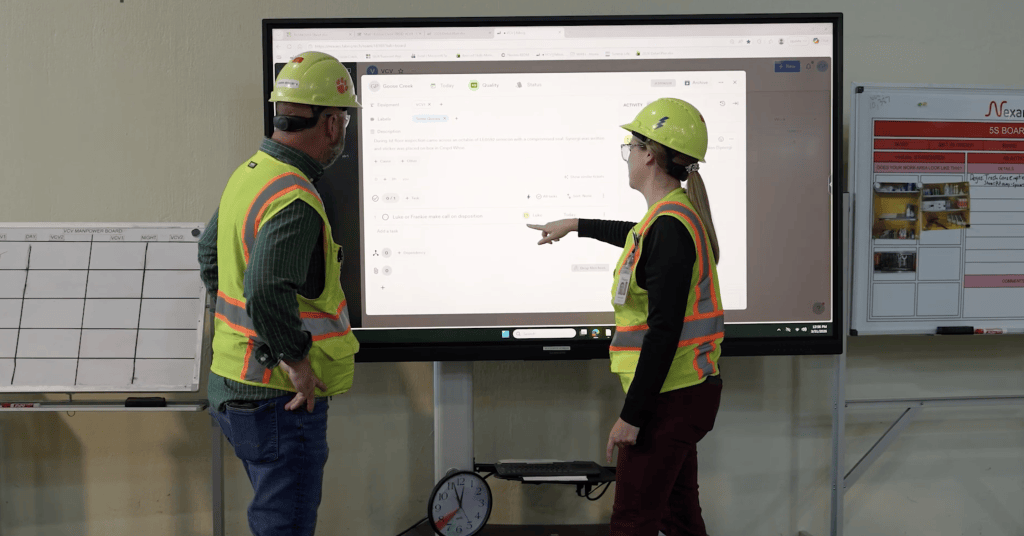
What does a successful pilot actually look like?
Success doesn’t necessarily mean achieving every target in three months. A successful pilot should give you enough evidence to answer a few fundamental questions:
- Does this solve a real problem?
- Will teams use it?
- Can we demonstrate meaningful value?
- What needs to change before we scale?
- Do we know how to replicate it elsewhere?
If the answer to those questions is clear, the pilot has done its job.
From digital pilot to operational transformation
The most valuable outcome of a pilot may not be the technology itself. It may be the opportunity to discover how your organization can adopt new ways of working.
A well-designed pilot can connect initiatives that are often treated separately: lean transformation, digital transformation, and operational excellence.
Lean provides the improvement mindset and operating discipline. Digital tools provide new ways to connect people, processes, and data. Operational excellence brings these elements together into a system that can be sustained and improved over time.
That’s where pilot-to-scale becomes more than a deployment strategy. It becomes a way to make transformation repeatable.
How Fabriq approaches pilot-to-scale
At Fabriq, we start customer projects with a structured three-month pilot. The scope is intentionally focused so teams can deploy the platform, train users, embed it into existing operational routines, and measure early results before considering a broader rollout.
The first month focuses on implementation and training. The following two months focus on adoption, refinement, and measuring results.
Throughout the pilot, the customer and Fabriq teams work together through regular check-ins, workshops, feedback, and adjustments.
The objective is to understand how it works within the site’s operational reality and create the foundations for scaling it across the organization.
Ready to move from pilot to scale?
For manufacturers, transformation doesn’t have to mean changing everything at once. A focused pilot can provide a practical way to test new approaches, involve frontline teams, demonstrate value, and learn what it takes to scale.
Start small. Learn quickly. Build what works. Then scale it.
