

Jidoka is a core concept in Lean Manufacturing. It helps factories build quality into their processes while improving efficiency. At its heart, Jidoka means stopping work when a problem appears, fixing it right away, and preventing it from happening again.
This article explains what Jidoka is, where it comes from, its key principles, and how factories can use it today. The goal is to give a clear, beginner-friendly introduction to this built-in quality approach.
What is Jidoka: definition and origin
Jidoka is often defined as “automation with a human touch.” It means that machines or processes can detect abnormalities and stop automatically when something goes wrong.
Instead of letting defects continue down the production line, Jidoka makes problems visible and forces action. Operators can then fix the issue immediately, before it creates waste, rework, or customer complaints.
In simple terms, Jidoka ensures that:
- Problems are detected early
- Defects do not move forward
- Quality is built into the process, not inspected at the end
Although Jidoka is often associated with machines, it also applies to manual and semi-automated processes as well. Any process that can signal a problem and stop is practicing Jidoka.
Where does Jidoka come from?
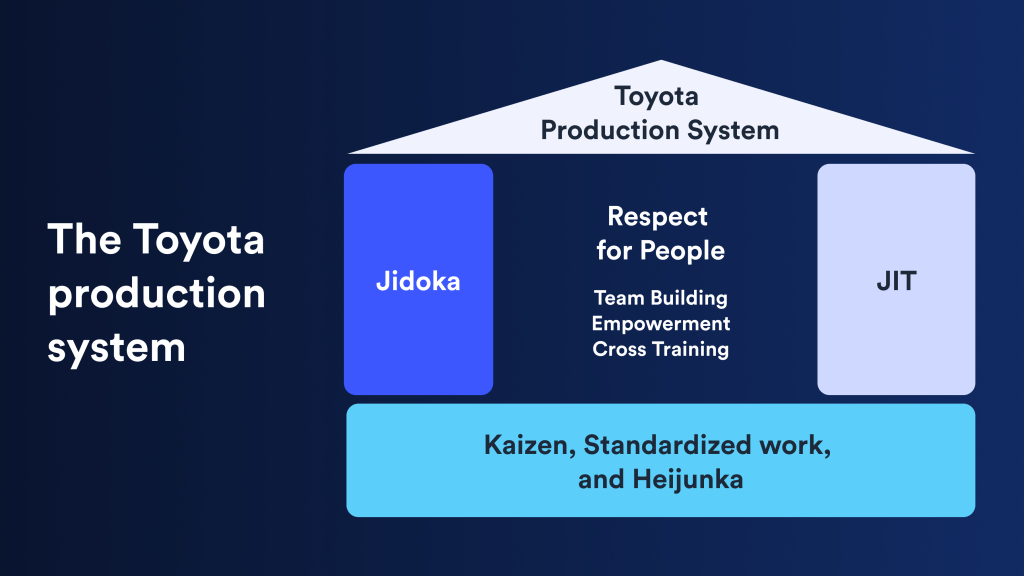
The concept of Jidoka comes from Toyota and the Toyota Production System (TPS). Toyota founder Sakichi Toyoda invented the first automated loom, which was able to detect broken threads and stop immediately. By stopping immediately, it prevented defective fabric and allowed one operator to manage several machines at once.
This idea later became one of the two pillars of the Toyota Production System:
- Just-in-Time (JIT): producing only what is needed, when it is needed
- Jidoka: building quality into every step of the process
Together, these principles transformed manufacturing and influenced Lean practices worldwide.
The 4 Principles of Jidoka
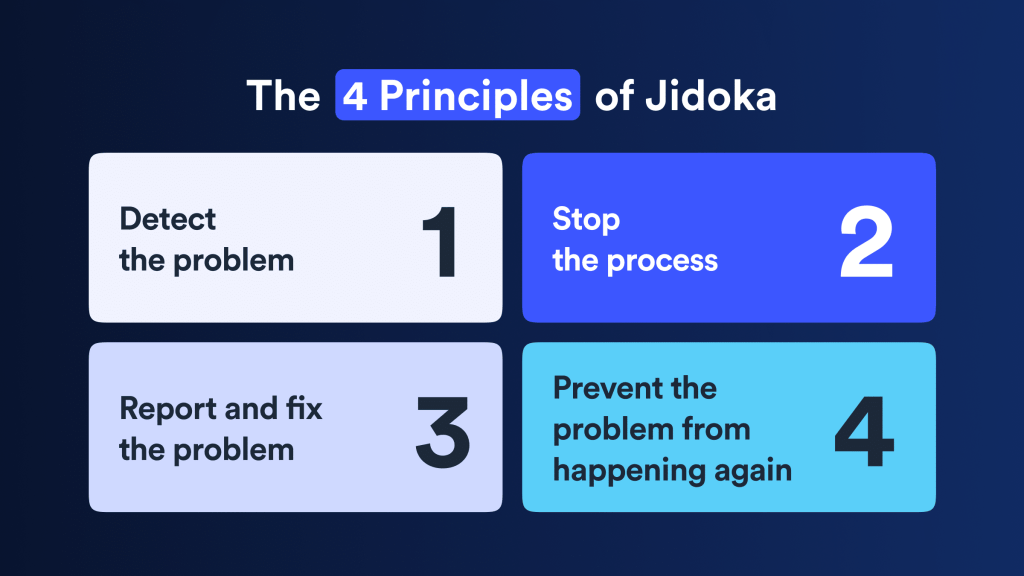
Jidoka is based on four simple yet powerful principles. These principles help teams react quickly and solve problems at their source.
- Detect the problem: First, set up detection systems to identify anomalies as soon as they appear. These might be sensors, alarms, or warning lights throughout the production line. A common example is the Andon system, which uses visual signals to show the status of a workstation. When something goes wrong, the signal alerts the team immediately.
- Stop the process: Once a problem is detected, you must stop the production line. This prevents defects from spreading further down the line. Stopping production may feel risky at first, but it actually protects productivity in the long term. By stopping the process, you avoid large batches of defective products.
- Report and fix the problem: After you stop the process, operators and supervisors must work together to correct the issue. The goal is to restart production as quickly and safely as possible. This step emphasizes fast response and teamwork on the shop floor.
- Prevent the problem from happening again: The final step is to eliminate the root cause of the problem. Teams often use Lean problem-solving tools such as the 5 Whys or 8D method. By addressing root causes, Jidoka supports long-term, sustainable improvement to prevent future recurrence.
Advantages of the Jidoka method in Industry 4.0
In the Industry 4.0 era, Jidoka is proving to be a major asset for ensuring the quality and reliability of products or services. Specifically, the method enables you to:
- Reduce the cost of scrap, rework and recalls by identifying and correcting anomalies as soon as they occur;
- Increase productivity. By minimizing production stoppages through automatic problem detection, this lean quality principle enables more efficient use of resources and more streamlined production;
- Reduce the risk of machinery- or operator-related accidents;
- Involve operators in problem-solving and enhance their autonomy and responsibility;
- Foster a culture of continuous improvement. Encourage workers to learn from production defects, to analyze the root cause of problems and to implement sustainable solutions.
How to Implement Jidoka in a Factory
Introducing Jidoka requires more than technology. It also requires clear standards and the right mindset.
1. Identify critical processes
Start by analyzing your production processes. Focus on areas where defects, delays, or safety risks occur most often. These are strong candidates for Jidoka.
2. Set up detection systems
Next, introduce ways to detect abnormalities. This may include:
- Sensors on machines
- Visual management tools
- Real-time monitoring software
The key is to make problems visible as soon as they appear.
3. Standardize response actions
Define clear rules for what happens when a problem is detected. Who stops the process? Who is notified? What steps must be followed?
Standard work ensures that everyone reacts consistently and effectively.
4. Train teams and leaders
Jidoka only works if people understand and trust the system. Train operators, supervisors, and managers on:
- When to stop production
- How to report problems
- How to participate in problem solving
It is essential to create a culture where stopping the line is encouraged, not punished.
5. Support continuous improvement
Finally, review performance regularly. Use data from Jidoka systems to identify trends, recurring issues, and improvement opportunities.
Over time, this approach strengthens processes and builds a culture of operational excellence.
Jidoka: Building Quality at the Source
Jidoka is a foundational Lean principle that helps manufacturers deliver consistent quality while improving efficiency. By detecting problems early, stopping processes when needed, and focusing on root cause analysis, factories can reduce waste and improve performance.
When combined with the right tools, training, and mindset, Jidoka becomes more than a method. It becomes a way of working that supports long-term success in modern manufacturing.
Discover how fabriq and Jidoka come together to help teams detect problems earlier, empower operators, and build quality directly into daily operations.

Jidoka FAQs
What is Jidoka?
Jidoka is often defined as “automation with a human touch.” It means that machines or processes can detect abnormalities and stop automatically when something goes wrong.
Why is Jidoka used in manufacturing?
Instead of letting defects continue down the production line, Jidoka makes problems visible and forces action. Operators can then fix the issue immediately, before it creates waste, rework, or customer complaints.
Where does Jidoka come from?
The concept of Jidoka comes from Toyota and the Toyota Production System (TPS). In the early 20th century, Toyota founder Sakichi Toyoda invented an automatic loom. This loom stopped itself whenever a thread broke.
What are the 4 principles of Jidoka?
Jidoka is based on four simple but powerful principles: Detect the problem, Stop the process, Fix the problem right away, and Prevent the problem from happening again.
What is the Andon system in Jidoka?
A common example is the Andon system, which uses visual signals to show the status of a workstation. When something goes wrong, the signal alerts the team immediately.
Why does Jidoka stop the process when there is a problem?
Once a problem is detected, the process must stop. This prevents defects from spreading further down the line.
What are the benefits of Jidoka in modern manufacturing?
Key benefits of Jidoka include: Better quality, Higher efficiency, Improved safety, Empowered operators, and Continuous improvement.
How do you implement Jidoka in a factory?
Introducing Jidoka requires more than technology. It also requires clear standards and the right mindset. Start by identifying critical processes, set up detection systems, standardize response actions, train teams and leaders, and support continuous improvement.