
Lean Challenge: 4 weeks to run more effective continuous improvement rituals
Lean rituals like tiered meetings (SIM), Gemba Walks, 5S audits, and problem-solving routines are essential tools for engaging teams, surfacing issues early, and driving performance on the shop floor. But when these rituals are poorly structured, they quickly lose effectiveness. Teams disengage, action items fall through the cracks, and problems go unresolved. What should be a daily engine for improvement becomes just another box to check.
That’s why we created this 4-week Lean Challenge: a practical guide designed to help manufacturers like you bring structure, rhythm, and impact back to your frontline routines.
Download the guide now to re-energize your shop floor, boost team alignment, and turn your daily rituals into real drivers of continuous improvement.
17 June 2025
Download the lean challenge to improve your factory rituals:
Lean Challenge
💡 Why this guide?
Because in the reality of the shop floor, building effective, consistent, and engaging rituals is a real challenge. But when well-designed, these routines can become a powerful driver of performance, team cohesion, and continuous improvement.

Take back control of your rituals, step by step

Engage your teams with a concrete, hands-on approach

Build lasting momentum for continuous improvement
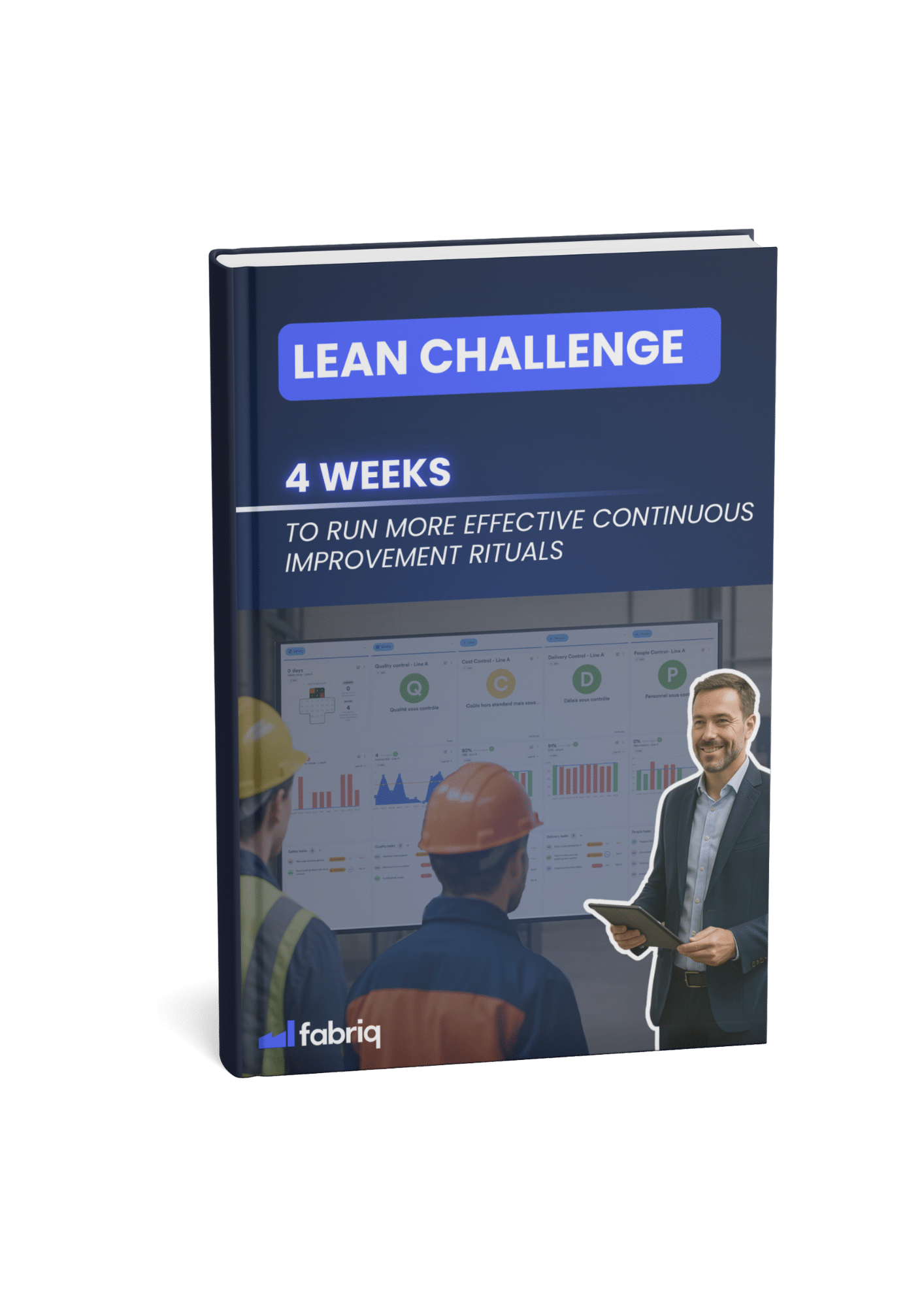
4 weeks to restore meaning, rhythm and impact to your frontline routines:
Week 1: Diagnose Your Current Rituals: Understand what’s not working so you can fix it
Week 2: Restructure and Energize Your Rituals
Week 3: Improve the Follow-Up of Your Actions
Week 4: Maintain the momentum and continuously improve

Audrey Herry
Industrial Performance Manager at Bel Group
“Since fabriq was implemented at our site, our performance culture has taken a real leap forward. We’ve fully digitized 100% of our performance routines. Every day, 40 performance management meetings take place across each cell and workshop on site. Daily problem-solving initiatives are launched, and most importantly, we’ve seen a true surge in the number of continuous improvement actions initiated, and actually carried out, by the teams themselves.”

Julien Mandegou
Production Manager at Bel Group
“We’ve seen improvements in how actions are tracked and shared, how KPIs are filled out, and in the audits, both in how they’re conducted and how the results are reported back.”

🚀 Request a Demo Today!